
Who this is for
Industrial ERP
Run industrial work with one accountable operating view.
For project-driven organisations that need engineering, procurement, manufacturing, quality, cost, and delivery signals in one working path.
The operational problem
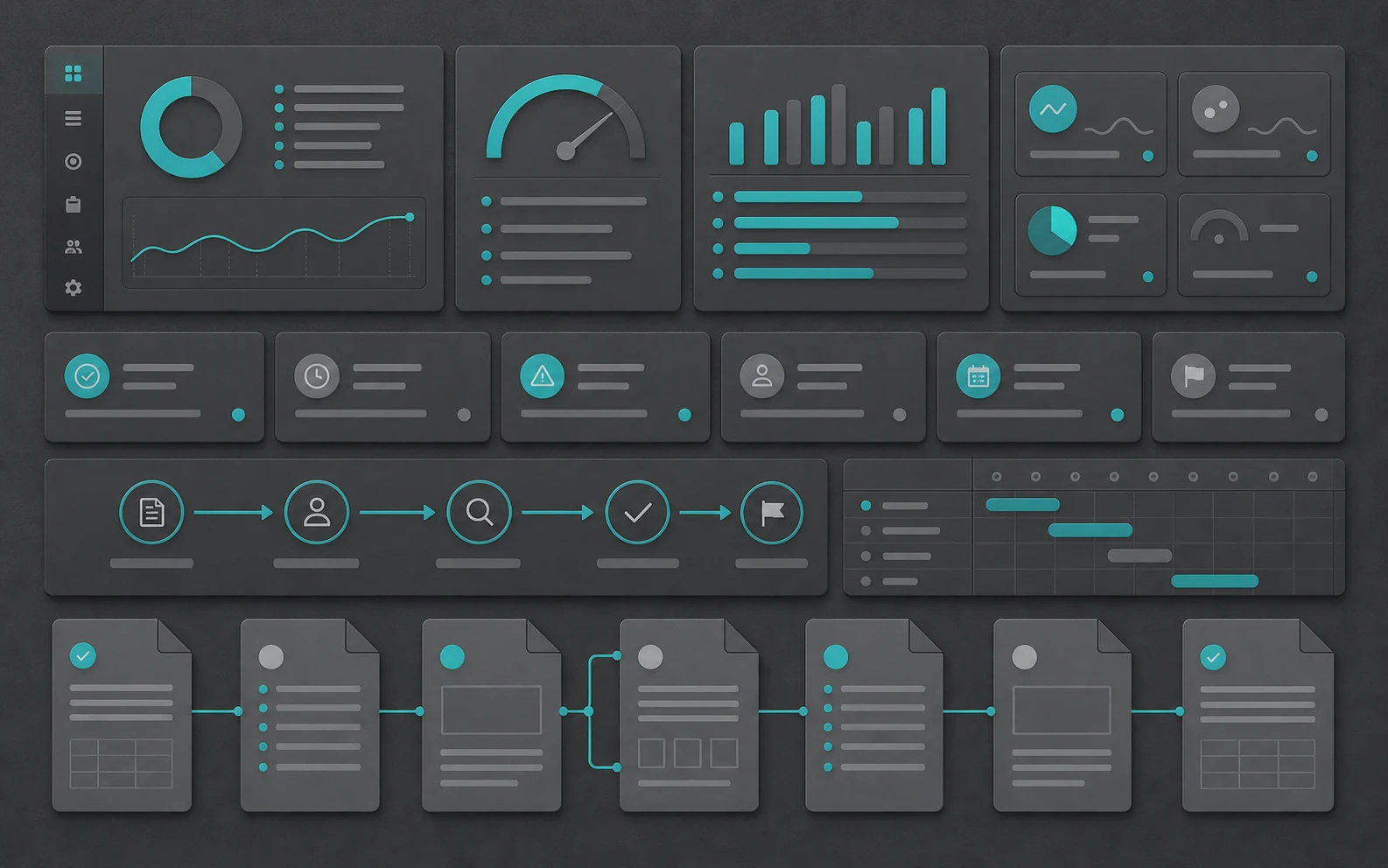
Industrial work is often split between registers, spreadsheets, correspondence, and reports. The result is a view of activity without a dependable path to the next decision.
How the product works
One path from record to review
The workflow keeps role, input, output, and approval point together.
Capture the operating record
Bring documents, quantities, responsibilities, and dates into a shared record.
Coordinate the next obligation
Route review, exception, and ownership without losing the source context.
Review readiness with evidence
Present status, blockers, and supporting evidence for management review.
Capability groups
Capabilities shaped around the real decision.
Each capability group is defined with a clear boundary and reviewable output.
Shared operating records
Keep project, engineering, procurement, production, quality, and cost signals connected around the work.
Ownership and exceptions
Make the responsible role and the next action visible when a record leaves its normal path.
Management views
Shape views for decisions rather than reproducing every underlying transaction.
Configurable foundations
Adapt states, fields, and approvals to the defined workflow and interfaces.
What each role can do
Responsibility stays beside the record.
- Operations ownerOperations ownerReview exceptions, owners, and next actions.
- Project managerProject managerFollow delivery readiness across functions.
- Functional leadFunctional leadMaintain the records and evidence within the agreed boundary.
Outputs and management views
Outputs are prepared for review.
- Operational status view
- Exception and ownership list
- Review-ready management report
Integration and deployment
Clarify the technical boundary before build.
Integration boundaries are defined around the master data, document source, identity, and reporting interfaces that the customer approves.
Security and control considerations
Control is part of the product experience.
Role-based access, defined data scope, review states, and audit-friendly records are treated as part of the workflow design.
Why ZARIR
The difference must be defensible.
- Industrial and project-driven workflow orientation
- Connection of technical, commercial, document, and execution context
- Bilingual Persian and English experience
- Configurable delivery with explicit boundaries
Product FAQ
Who is this product for?
It fits organisations that need one controlled view across more than one operating function.
Is every module standard?
Scope is confirmed through workflow mapping; capabilities may be standard, configurable, or integration-dependent.
How does deployment start?
The first step is a defined process, data, role, and acceptance boundary—not a promise of a fixed duration.
Can existing records be migrated?
Migration is assessed after source quality, ownership, mapping, and retention requirements are reviewed.
Related solutions and industries
Enter through the right context.
Next step
Review the product against a real problem.
Share a process, document set, or repeatable decision so the product, data, and acceptance boundary can be defined.
Request a Product Demo↗