zarir

Smart ERP · ERP-ZFLOW

Connect every workflow. Control every operation.

ERP-ZFLOW is a connected industrial ERP for project-driven, engineering-intensive, and manufacturing organizations. It brings projects, people, documents, materials, costs, and decisions into one controlled operational environment.

An operational system should connect planning, resources, records, quality, and daily action rather than simply adding more forms. Good design makes state concise and understandable for each role without losing the follow-up path.

Real product view

See ERP-ZFLOW in its real operating surface.

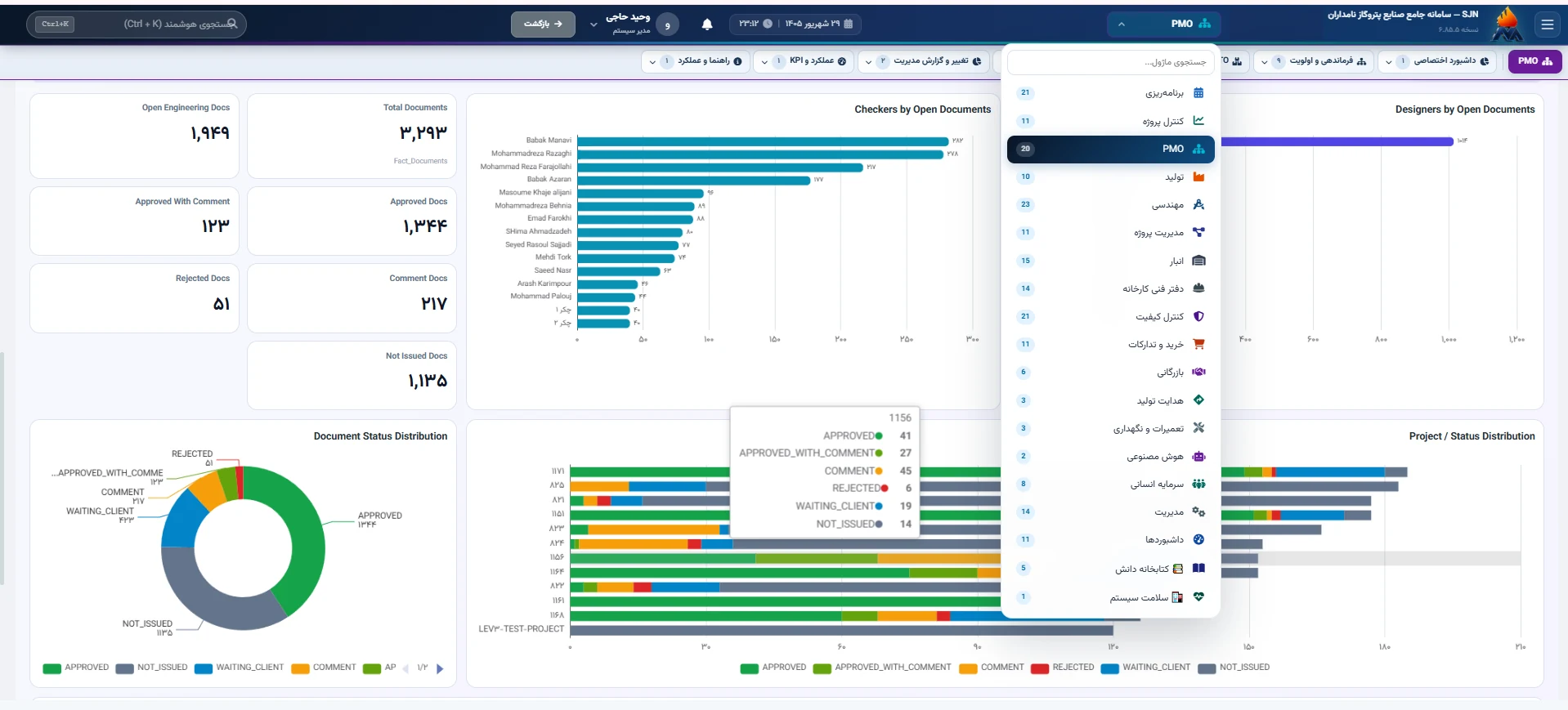
This is a real ERP-ZFLOW/PMO dashboard view, showing documents, project control, ownership, and indicators together in the operating surface.

Product evidence

The dashboard stays connected to real work.

A status view matters when it connects to a record, role, and next action; this image shows that product surface.

نمای واقعی داشبورد ERP-ZFLOW و PMO

Solutions

For daily and cross-functional operations

From role and data models to dashboards, forms, and approval flows, the operational surface should match the organisation’s real rhythm. We shape one coherent source for entry, status control, and reporting.

Turn daily planning into a shared decision

Connect work status to ownership and next action.

  • Model roles, states, and record ownership
  • Create a shared surface for planning and action
  • Produce operational reporting from traceable data

Operational ERP becomes useful when master data, planning, procurement, quality, records, and reporting connect to each role.

Competitive advantages

Move ERP from forms to traceable execution.

The advantage is not the number of modules; it is the connection between role, state, record, schedule, material, and the next action.

Closed-loop execution

Revision and approval do more than create a record; they change material readiness, schedule status, and work permission.

Role-based visibility

Managers, engineers, planners, procurement, QC, and execution teams see the right level from one operating record.

Decision trace

Owner, timestamp, revision, approval, and downstream impact stay together so status does not require manual reconstruction.